Sunday, May 25, 2014

1001 Movies You Must See Before You Die- Gone with the Wind


http://upload.wikimedia.org/wikipedia/commons/2/27/Poster_-_Gone_With_the_Wind_01.jpg#133- Gone with the Wind (1939)
Starring: Clark Gable, Vivien Leigh, Leslie Howard
Directed by: Victor Fleming


Plot Summary: While living at her family's cotton plantation, Tara, in Georgia, Scarlett O'Hara learns that the man she loves, Ashley Wilkes, is to marry his cousin, Melanie Hamilton. As Ashley is called to fight in the civil war, Scarlett consents to marry Melanie's brother Charles, only for him to die of pneumonia and measles while fighting in the war. After a brief time of mourning as a widow, Scarlett takes notice of Rhett Butler, a man who has been admiring her for quite some time. As the war worsens, Scarlett must take care of a pregnant Melanie while Ashley is away at war. With Rhett leaving to fight in the war, Scarlett returns to Tara in shambles, and vows to do anything for her and her family to survive.


It's been a month since my grandmother passed away. She was a very important woman in my life, who raised me and helped make me the man I am today. Everything I have in life I owe to what she taught me, and I thought I would share a tiny portion of the impact she had on me by reviewing a movie that she often cited as her favorite, Gone with the Wind. I was never really interested in seeing this film because I thought I knew what kind it was, a sappy, over the top, romance. But when I actually watched it, I was very surprised with how it differed from my expectations. The romance was far from perfect, and even ranged on abusive and dysfunctional, so I was left wondering what it was about the film that my grandmother loved so much. I think I have found the reason, and I hope this review does it justice and makes her proud.

http://cinescapism.files.wordpress.com/2011/02/imagea2fb.gifVivien Leigh stars as Scarlett O'Hara, a character that I had a real tough time liking throughout the film. The best way I can describe Scarlett is that she is an indecisive, spoiled, gold digger, whose pride gets the better of her throughout the film. While she does have her share of strong moments of character development, they are in spades and get lost in the shuffle when her more selfish attributes come out. It's almost puzzling to imagine Scarlett as a main protagonist, because her behavior is almost more fitting of an over the top villain than anything else, which makes it VERY difficult to actually root for her in the long run.

The man in constant pursuit of Scarlett's affection is Rhett Butler, played by Clark Gable. Gable has so much on-screen charisma that he is able to give Rhett an endearing charm throughout the film, mixed with an excellent amount of sarcasm and dry humor. However, towards the end of the film, Rhett exhibits some surly behavior that the audience can empathize with to an extent. They can understand why he is acting the way he is toward Scarlett, but is not supportive of what he is actually doing. And when their relationship continues to get rocky and the more they lose, the more the audience can sympathize with Rhett, because he is constantly holding on looking for something good to come their way. And on a side note, I know for a fact my grandmother thought Clark Gable was one of the most handsome men she had ever seen on the big screen, and it is certainly easy to see why with the amount of charm he exhibits in this film.

Rhett and Scarlett's dysfunctional relationship can all be attributed to the man that Scarlett really wants to be with, Ashley Wilkes, played by Leslie Howard. Ashley is cowardly and conniving, stringing Scarlett along the entire film with complete disregard towards her, or his wife, Melanie, played by Olivia de Havilland. Melanie is actually a more sympathetic character than Scarlett is in all of this because Melanie is genuine and has a deep love for her husband and a deep admiration for Scarlett as one of her closest friends.

One of the more talked about aspects of the film is its depiction of African Americans as slaves. I know that I've made the case in my review of Django Unchained, and touched base a little in my review of The Jazz Singer, but I don't think there is a reason to get upset over "racially insensitive" characters on a historical point of view. I actually really liked Mammy, played by Hattie McDaniel, and thought she was a fun, memorable character of the film. The filmmakers did not make the characters stereotypes to be offensive, but to depict the role slaves had at that time in history.

http://theartofmakingart.files.wordpress.com/2013/03/rhett-butler-scarlett-o-hara-gone-with-the-wind-scarlett-ohara-and-rhett-butler-6967608-1595-1137.jpg
I think Gone with the Wind was my grandmother's favorite film because of its lavish scale. Released at an early point in film history, the film was able to captivate audiences with its use of massive sets and accentuated the color scale in the film by utilizing Technicolor. Everything is able to burst off the screen and it is really easy to get lost in the atmosphere, and perhaps that was what my grandmother loved so much about the film: that it was a visual spectacle and the viewer felt embraced by its vibrant scenery, like they were inside a beautiful portrait. And that's what this film is, a work of art.


Rating: 4.5 out of 5 stars

This is the definition of a classic film. Gone with the Wind is one of those movies that will live in immortality amongst the most celebrated films of all time, and is a film that is worth recommending to all moviegoers to see once, and even worth owning in your DVD collection.

Comment below to share your thoughts on the movie or to discuss a topic that I left out of my review

Gone with the Wind and movie images are copyrighted by Metro-Goldwyn-Mayer

Tuesday, May 20, 2014

1001 Movies You Must See Before You Die- The Jazz Singer


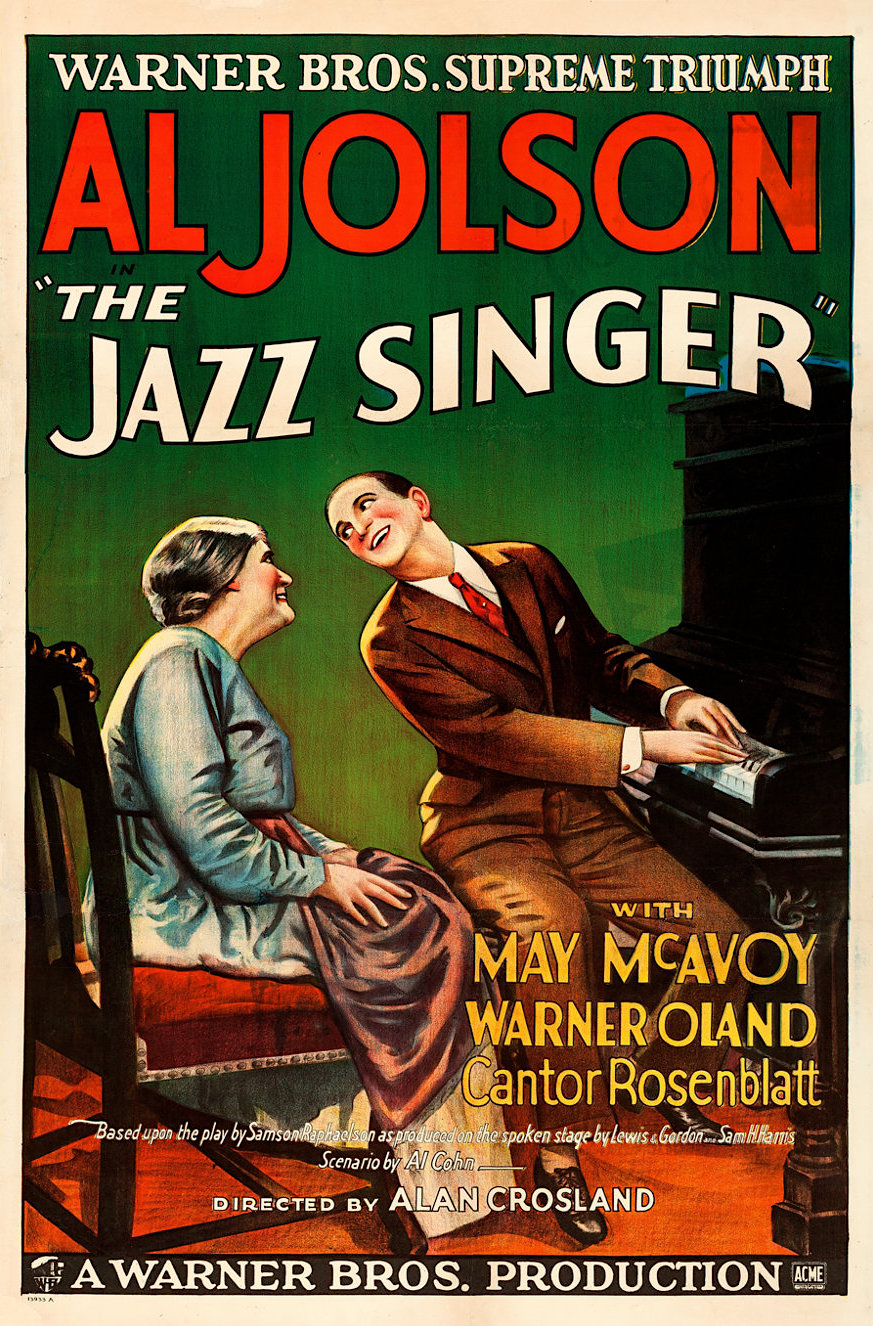
http://upload.wikimedia.org/wikipedia/commons/d/d2/The_Jazz_Singer_1927_Poster.jpg#38- The Jazz Singer (1927)
Starring: Al Jolson, May McAvoy, Warner Oland
Directed by: Alan Crosland


Plot Summary: As a child, Jakie Rabinowitz has a passion for being a jazz singer, a passion that his father strongly disapproves of. With five generations of Cantors in the family, Jakie is given a whipping by his father to convince him to give up singing. Jakie then runs away from home, vowing never to return. Ten years later, Jakie has become a professional jazz singer, under the name Jack Robin. After being introduced to Mary Dale, Jakie is given his big break as the lead in a new musical, April Follies. At the same time, Jakie's father becomes ill and it is now up to Jakie to decide which is more important: the show, or his family and faith.


Before beginning the actual review, I would like to take a moment to apologize for a large gap of time between this review and my last one. These past few weeks have been very hectic in finishing the school year, moving into my summer housing, and looking for a summer job. I'll be spending the next few weeks trying to get back on the reviewing schedule I had originally planned for the summer. Keeping up with the theme of film history, The Jazz Singer is one of the most important films in history for its innovative use of sound at a time when all films were silent.

http://upload.wikimedia.org/wikipedia/commons/5/5c/JazzSingerJackMother.jpgThe film stars Al Jolson as the main character, Jakie Rabinowitz. Jolson adds a lot of flavor to the character, and has enough bravado and charisma to charm audiences with his performance. The layers of Jakie as a character has to do with his motivations (his love of music and expressing himself) and the relationships he has with a handful of good supporting characters.

Jakie's main love interest is Mary Dale, played by May McAvoy, who is a strong enough character that supports and loves Jakie, and serves as a bridge between Jakie and his struggles with his family that plagued him since childhood. Cantor Rabinowitz, played by Warner Oland, is a no-nonsense father-type character who disapproves of his son's love of music because of his loyalties to upholding family tradition (five generations of Cantors in the family broken by his son's pursuit of being a jazz singer). But the best relationship in the film is between Jakie and his mother, played by Eugenie Besserer. She tries her hardest to maintain the relationship between Jakie and his father, and is really Jakie's main motivation in trying to make amends. Jakie loves his mother to the point where the film's final scene involves him singing the song "My Mammy" in front of her and a live crowd.

http://upload.wikimedia.org/wikipedia/commons/5/51/Al_Jolson_Jazz_Singer.JPGOne of the most discussed aspects of the film is its (modernly) controversial use of blackface makeup for Jakie to use while he performs under his stage name, Jack Robin. Once the viewer does a little research about the use of blackface at the time, it should at least put a bit of perspective and context to the discussion. While the action itself is a bit confusing, it is not without reason, and that reason is not to be racially insensitive (at least, that's what I think).

While the film is known for its use of sound, it is only used for scenes involving Jakie singing. Of course, the film utilizes sound to emphasize the beauty in Jakie's singing, almost serving as a representation of the sheer power in his voice, that it brought sound to film for the first time ever. It's often said that a little can go a long way, and in the case of The Jazz Singer, it certainly goes a long way in introducing a whole new form of technology in filmmaking.


Rating: 3 out of 5 stars

The Jazz Singer certainly has its spot in film history, but much of the film has not aged well, and despite its use of sound, feels more like a silent film than people would expect. A recommendation for movie buffs as a demonstration of how sound in film has evolved over the decades.

Comment below to share your thoughts on the movie or to discuss a topic that I left out of my review

The Jazz Singer and movie images are copyrighted by Warner Bros.

Saturday, May 10, 2014

1001 Movies You Must See Before You Die- Metropolis


http://upload.wikimedia.org/wikipedia/en/0/06/Metropolisposter.jpg#33- Metropolis (1927)
Starring: Gustav Fröhlich, Brigitte Helm, Alfred Abel
Directed by: Fritz Lang


Plot Summary: In the future, the Master of Metropolis is Joh Fredersen, a wealthy industrialist that rules over the city. His son, Freder, spends his time with the other children of the wealthy, until he sees a young woman named Maria. Determined to find her again, Freder makes his way to the machine rooms and sees the horrors that he had been sheltered from his entire life. Fredersen has been meeting with the inventor Rotwang, who loved a woman named Hel before she left him to marry Fredersen. Rotwang has been working on a robot that he plans to create in Maria's likeness and destroy Freder, as revenge for Hel dying while giving birth to Freder.


I thought it best to start my summer review series by reviewing at least one silent film, and there was only one I was really interested in covering. Since the overall theme is looking at the history of film, it would only make sense to review a film that changed the landscape of motion pictures and serves as one of the most important and innovative films for its genre. The film I'll be covering today is Metropolis, and the impact it had on science fiction. Because there are versions of this film in both English and German, and cuts of the movie that are missing original footage (deemed "lost"), I have decided to review the 2 hour cut in English, for the bare boned foundation of the film.

The film follows a handful of main characters that are pretty harmless within the film's narrative. Gustav Fröhlich plays the main protagonist, Freder, Brigitte Helm plays the object of Freder's affection, Maria, and Alfred Abel plays Freder's father, Joh Fredersen. There's only so many times you can say "they act really well with their faces and gestures," in terms of actors in silent films before it gets old, so that's all I'll say there. There are some intricate relationships between the main characters though, including Freder's love for Maria, and his strained relationship with his father. Joh Fredersen is also an intriguing character, having an imposing sense of power over other characters based on his reputation. But, even if these are the main characters of the film, they aren't the reasons moviegoers would initially want to check out this film. You hear about an innovative science fiction film, and its the environment created that attracts the viewer, not generic film characters that aren't considered to be related to the concepts of science fiction.

http://scene2scene.files.wordpress.com/2013/04/a2.jpgThe most famous and marketable aspect of this film is the robot you see on all the posters and photos of the film, which is actually a robot duplicate of Maria, also played by Brigitte Helm. The actual robotic version of the creation, created by Rotwang, played by Rudolf Klein-Rogge, doesn't spend a whole lot of time on film, but remains a huge influence on film history. The most noticeable is the obvious influence on the design of C-3PO, making the creation one of the most iconic movie images in the science fiction genre. Add to the fact that Helm was actually in the costume for the film's production, a costume that was groundbreaking for detail in 1927, and you have a fascinating mixture of an actor's dedication and making a director's vision a reality through costuming and effects.

One of the most surprising elements of Metropolis is in its attention to props and sets. I'm not sure if it's a mentality I have about the early days of film, but I never expected the sets to be so grand and detailed. Nowadays, sets are easier to make thanks to larger budgets for construction and the use of CGI to create more difficult sets and backgrounds. But in 1927, that wasn't the case, and efforts made to make sure the sets look magnificent are greatly noticed and appreciated, as they played an integral role in making the world within the film look HUGE.

http://scene2scene.files.wordpress.com/2013/04/a6.jpg
I believe the most commonly used phrase to describe Metropolis is to call it a film that was "groundbreaking for its time." For a film released nearly 90 years ago, it was a film far ahead of its time for production value. The film was so innovative that it inspired many filmmakers to create their own adventures in the science fiction genre, including Stanley Kubrik, Steven Spielberg, and George Lucas. That's right, without Metropolis, there would be no Star Wars (digest that for a moment).


Rating: 3.5 out of 5 stars

It's easy to see the influence Metropolis had on film, thanks to its lavish sets and groundbreaking special effects. While some elements haven't aged the greatest, it's still a must watch for all fans of film at least once.

Comment below to share your thoughts on the movie or to discuss a topic that I left out of my review

Metropolis and movie images are copyrighted by UFA and Paramount Pictures

Sunday, May 4, 2014

An Introduction to my Summer Review Series


The last seven months on this blog have been dedicated to themed months revolving around horror, silent, Christmas, Disney, musicals, gangster, and Western films. It's been a truly rewarding experience to channel my writing to have an overarching message for each month. Come September, I will attempt to pick that up again.

With all that said, I must admit that I did have difficulty coming up with four themes for the months during the summer. It occurred to me that it might be best to actually have an overarching theme that develops throughout the ENTIRE summer.

So what kind of concept can be so deep, yet so broad, that it can actually go throughout an entire four month concept while still spanning the decades and seeming like a fresh concept? Then it hit me: Film History. For the summer, I will be sitting through films that have had the biggest pop culture impact on film history throughout the decades. This series of summer reviews will consist of 20 reviews (too much?) starting from the 1920s and going through to 2010s (that's 10 decades, so 2 films per decade).

This summer will offer a more open selection for me in choosing films that are important to watch. I hope this will be a lot of fun and provides a chance to look at the bigger picture when it comes to film: its history.

So coming soon is my first post in my brief history of film during the summer starting with the 1920s...

Also, feel free to comment on the posts and share them with your friends, family, or anyone who appreciates film. Feedback is very appreciative.

Sincerely,

Danny Fowler (a.k.a. The Author)


Copyright 2013 Fowler's Film Blog.

Wednesday, April 30, 2014

1001 Movies You Must See Before You Die- The Good, the Bad and the Ugly


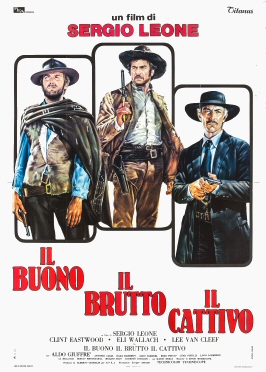
http://upload.wikimedia.org/wikipedia/en/4/45/Good_the_bad_and_the_ugly_poster.jpg#471- The Good, the Bad and the Ugly (1966)
Starring: Clint Eastwood, Lee Van Cleef, Eli Wallach
Directed by: Sergio Leone


Plot Summary: During the Civil War, Mexican bandit Tuco Ramirez is ambushed by bounty hunters, but is saved by the mysterious Blondie, where they then form a business partnership of collecting bounties on Tuco's head and saving him at the last second. They stumble upon a dying fugitive named Bill Carson, who has information about a cache filled with 200,000 dollars of Confederate gold. Carson tells Tuco the graveyard where the gold is buried, and tells Blondie the name on the grave. Tuco and Blondie disguise themselves as Confederate soldiers and are taken to a Union prison camp, where they meet the ruthless Angel Eyes, who has also been searching for the gold. Angel Eyes tortures Tuco to get his information on the gold's whereabouts and forms a partnership with Blondie to split the gold between the two of them. Once Blondie is able to get away from Angel Eyes, he reforms his original partnership with Tuco. When all three men arrive at the graveyard, it is agreed that the three of them can't share the gold, so the gold will go to the two men that survive a three-way Mexican standoff.


When I started this whole Western month, there was only one objective I had in mind: to see The Good, the Bad and the Ugly. There are usually two types of Western fans out there. There are those who idolize John Wayne as the great American cowboy, or those who prefer Clint Eastwood as a more rugged and gritty outlaw type of anti-hero. I remember having a discussion with my uncle last year about his experience with Westerns when he was growing up and he told me that him and his brothers grew up at a very unique time to be a Western fan, as they were able to see the twilight years of John Wayne's career and the beginning stages of Clint Eastwood's career. From that conversation, I knew there was only one conclusive thing I could do to formulate my opinion, which was to watch a handful of John Wayne and Clint Eastwood movies to see which style I preferred better.

http://knightslanding.files.wordpress.com/2011/12/eastwood_good_ugly.jpgThe star of the film, as well as being "The Good," is Clint Eastwood as Blondie. Eastwood is actually known as "The Man with No Name," a character that is used throughout Sergio Leone's Dollars Trilogy and has a different nickname in each film. Like I said in the intro, Eastwood is a very different type of leading man than John Wayne was. Instead of being the traditional cowboy who upholds justice and being the epitome of good, Eastwood plays an outlaw with enough charisma and attitude to pull the audience into rooting for him. There are way too many scenes where you will be left in amazement of how cool of a character Blondie is, and a lot of that has to do with the performance given by Eastwood, who was still a relatively new actor at the time and this was the role that started his legacy as one of the most celebrated entertainers in film history. Eastwood's look also adds a lot to modern Western pop culture, making it cooler to be an outlaw than a cowboy.

Angel Eyes, played by Lee Van Cleef, is "The Bad." Van Cleef, who has appeared in minor roles in Gunfight at the O.K. Corral and The Man Who Shot Liberty Valance, gives the character a very menacing presence through the use of a sly grin and sharp, narrow eyes (hence his nickname). In all honesty, Angel Eyes is the character with the least amount of screen time out of the three leads, but in this case, sometimes less is more as he is able to leave a lasting impression with the audience through a limited amount of scenes. Within his introduction, he is able to utilize his grin and stare and is proves to be a formidable antagonist, and uses little to no words for most of the scene. Only towards the end of the scene does he actually talk, but by then, you KNOW that he is going to be a character worth remembering throughout the film.

"The Ugly" is Tuco Ramirez, played by Eli Wallach. Wallach is that nice bridge between Blondie and Angel Eyes, where the audience being unsure if Tuco is a good guy or a bad guy. In hindsight, most of the characters have villainous tactics, but it is Tuco that is the least trustworthy of the three, but is also the most fun. He has many great lines and moments that range from hilarious to epic, including one scene where he tells a character off on why they shouldn't monologue before shooting him. However there are some really good scenes in which he develops a respectful partnership with Blondie, and a scene with Tuco's brother that unveils a lot about how Tuco's biggest demon is his greed and all that it has cost him. A lot of these scenes are actually thoroughly enjoyable, and all the more reason of why Tuco STILL isn't a trustworthy character, because despite all these admirable qualities, he will still sell you out for a shot at riches.

Only on rare occasion do I find it important to mention a film's music when discussing the important aspects of the film. THIS is the kind of film that is worth mentioning for its music. The score by Ennio Morricone offers three of my all-time favorite songs in movie history. Of course there is the film's theme song that is so iconic that anybody could reference what movie it's from by listening to it. But there are other songs that are iconic through the scenes they are used in. The famous graveyard scene where Blondie, Angel Eyes, and Tuco face off in a three-way Mexican standoff is highlighted by the songs "The Ecstasy of Gold" and "The Triple Duel." Add in great cinematography through the use of camera cuts and close ups and you have a recipe for great storytelling both visually and audibly. Don't believe me? Then watch the scene in its original form and then repeat the scene but without sound, it has an entirely different feel to it which illustrates that in order to properly execute the scene, both sound and visuals are necessary.
https://blogger.googleusercontent.com/img/b/R29vZ2xl/AVvXsEjbxo6cZc82koyWYeq4rMtWqoyOkiICTaw3tgzFqpABmt1ptjJcVBF9hzGYe0UTSuMnjhxqIn1Nm_cnYipQcRUDcMSUdsI1gc2dhcwGxgS6raoTOeqKFmrnY0mW2PrBU8z6NXSyf8-mklo/s1600/the-good-the-bad-and-the-ugly_4.gif
The Good, the Bad and the Ugly has a lasting film legacy in four areas. The first is Westerns, obviously, as it is one of the most recognizable names in the genre. The second is the career of Clint Eastwood (which I mentioned earlier), because without this film, he might not be the screen legend that he is today. The next two might be a little surprising, but the third is in the context of movie prequels. While the film is the final installment in the Dollars Trilogy, there are enough plot details that indicate that it takes place BEFORE A Fistful of Dollars and For a Few Dollars More. And the final subject is for foreign films. If you paid attention to some of the odd looking dubbing for the film, then you will notice that this isn't a purely American film. In fact, it is actually an Italian film instead. The amount of genres that this film fits within cements its rich value in cinematic history.


Rating: 5 out of 5 stars

WOW! Just WOW! The Good, the Bad and the Ugly lived up to every expectation I had for it and became an instant favorite of mine. Without a question this is the best Western I've seen so far and I personally recommend everyone see it and own in your DVD collection.

Comment below to share your thoughts on the movie or to discuss a topic that I left out of my review

The Good, the Bad and the Ugly and movie images are copyrighted by United Artists

Thursday, April 24, 2014

1001 Movies You Must See Before You Die- The Man Who Shot Liberty Valance


http://upload.wikimedia.org/wikipedia/en/b/b7/The_Man_Who_Shot_Liberty_Valance.jpg#402- The Man Who Shot Liberty Valance (1962)
Starring: James Stewart, John Wayne, Vera Miles
Directed by: John Ford


Plot Summary: After an attack from the ruthless Liberty Valance and his gang, Ransom Stoddard is rescued and nursed back to health with the help of Tom Doniphon and Hallie Ericson. Valance terrorizes the town of Shinbone with Marshal Link Appleyard and the rest of the citizens unwilling to enforce the law on Valance. The only person courageous enough to stand up to Valance are Stoddard and Doniphon, but under different circumstances. As a lawyer, Stoddard believes that enforcing the law is enough, and as a gunslinger, Doniphon believes the only way to bring peace would be to kill Valance. After being embarrassed by Valance, and not wanting Doniphon to fight his battles for him, Stoddard acquires a gun and begins to train himself for something he may not want to do, but knows it might be the only way to enforce the law in Shinbone, as he plans to get his revenge and shoot Liberty Valance.


When it came time to handle a John Wayne film for Western month, I had a pretty tough time selecting one. I was originally going to do The Searchers, often considered John Wayne's best film, but decided to save some of the more iconic Westerns for a later date. That being said, I was very much intrigued by The Man Who Shot Liberty Valance. Why? Well, not only is it a Western that stars John Wayne, one of the greatest cowboy actors of all time, but also stars James Stewart, one of my favorite actors of all time and definitely my favorite actor of the earlier days of cinema.

The Man Who Shot Liberty Valance is centered on Ransom "Ranse" Stoddard, played by James Stewart. Stoddard is a lawyer who feels out of his element within the Western setting and actually questions a lot of the ethics and logistics of why things are the way they are. There's an entertainingly self-aware attitude towards that that I can't help but find humorous and actually agreeing with Stoddard. Like many of his films, this is just another film in which Stewart gets to shine as one of the greatest actors of all time. He's a likeable main character, but not one you would imagine rooting for in the Old West because he is not a traditional cowboy, but is more of an underdog than anything else.

https://blogger.googleusercontent.com/img/b/R29vZ2xl/AVvXsEij7OtsaTlwk2i2dz7WR-wIsYhpvnVWXDOZKMwiJTh98fRO5Sg7j941HO9zddBTyboDhBKt-Ng6IIeXTUYlBpgcgrW5ioPL8Efm7jBIFySiQ3m-P8Hp0gmUej53ord9fOQPav_eXKjNGxXb/s1600/liberty+valance.jpg%E2%80%9D
Stoddard is helped, reluctantly, by Tom Doniphon, played by John Wayne. Despite being one of the most celebrated Western actors of all time, The Duke takes a back seat to Stewart in terms of screen time and primary focus within the plot. For majority of the film, Tom feels like a supporting character that is given weight due to John Wayne's star power. Tom's importance to the story becomes more prevalent in the film's final moments, but it Wayne's natural charisma that fuels the character's popularity. From his classical good looks, to the way he carries himself, to the way he says "Pilgrim," there are many facets to him that make John Wayne one of the most iconic actors of all time. 

The Man Who Shot Liberty Valance has a great cast of side characters. Among them are Hallie, played by Vera Miles, the love interest of both Ranse and Tom. She's a good enough character who is more of a plot point to stir up conflict between the two leads. Tom's right hand man Pompey, played by Woody Strode, serves as that "slave" type of sidekick for Tom and that's all I'll say about that (not opening that can of worms). There's the dim-witted Marshal Link Appleyard, played Andy Devine, who is rather annoying in how incompetent he is despite the fact that he is the Marshal of the town.

There are side characters, however, that really stick out among the great performances in the film. One of them is the film's antagonist Liberty Valance, played by Lee Marvin. He is having so much fun at playing this pompous and smarmy outlaw, that it is almost really hard to not "love to hate" him. The other is Mr. Peabody, the town drunk and owner of the newspaper played by Edmund O'Brien. Maybe it's my involvement with working for my school's newspaper, but I took a real liking to Peabody as a character, finding him very charming and humorous, as well as sympathetic when it is appropriate.

http://anamorphictilt.files.wordpress.com/2012/05/liberty_valance1.jpg
In terms of the film's legacy, it is the combination of the two veteran actors working together in a Western setting (there seems to be a pattern there, I'm sounding like a broken record). It's a bit slower paced than other films I've watched where the Old West is packed with action. The Man Who Shot Liberty Valance takes its time in investing in the town and characters, rather than focus on violence. It's a refreshing change of pace that takes its time to establish exposition before moving forward with the rest of the film. While there are some problems with the film that haven't aged well, it is still enjoyable thanks to a wonderful combination of great characters and storytelling.


Rating: 4 out of 5 stars

I'm not sure if it was because of John Wayne's lack of screen time as opposed to James Stewart's, but something seemed "off" about The Man Who Shot Liberty Valance. I'd recommend this film as a weekend rental in order to see some likable supporting characters, a loathsome villain, and great leading performances from James Stewart and John Wayne.

Comment below to share your thoughts on the movie or to discuss a topic that I left out of my review

The Man Who Shot Liberty Valance and movie images are copyrighted by Paramount Pictures

Friday, April 18, 2014

1001 Movies You Must See Before You Die- Butch Cassidy and the Sundance Kid


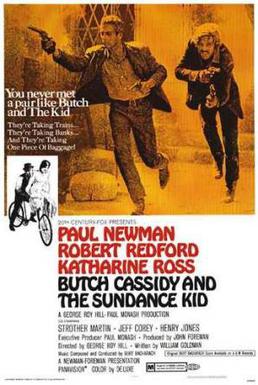
http://upload.wikimedia.org/wikipedia/en/f/fd/Butch_sundance_poster.jpg#516- Butch Cassidy and the Sundance Kid (1969)
Starring: Paul Newman, Robert Redford, Katharine Ross
Directed by: George Roy Hill


Plot Summary: In 1890s Wyoming, Butch Cassidy and the Sundance Kid return to their hideout to reunite with their infamous Hole in the Wall Gang. They proceed to pull off many train heists and become two of the most notorious outlaws in the West. In pursuit of revenge for the heists, E.H. Harriman, the owner of the Union Pacific railroad, has paid a posse to track Butch and Sundance until they are killed. With the help of Sundance's lover, Etta Place, the three escape to Bolivia to begin a new life of crime. Paranoid over being found by Harriman's posse, Butch suggests that he and Sundance give up their life of crime and proceed to live an honest life, so the two get real jobs and while they try their hardest to live honorable lives, they are forced back into a life of crime and admit that the straight life isn't for them.


When it comes to Westerns, there aren't many more famous than Butch Cassidy and the Sundance Kid. Going into the film, there's enough that I knew about it. I knew about Robert Redford and Paul Newman, Burt Bacharach doing the film's score, the song "Raindrops Keep Fallin' on My Head," and a handful of iconic scenes. What else is there to know about the film? I knew that when I finally sat down to watch this one, that I'd be watching a Western with great acting performances from two of the best actors of that era. But, is that all that the film has going for it?

http://thebestpictureproject.files.wordpress.com/2011/01/butch-cassidy-and-the-sundance-kid-1.jpgThe film stars one of the greatest teams in film history, with perfect comedic timing and a proper dichotomy of personalities. On one half of the spectrum is Butch Cassidy, played by Paul Newman. Butch is crafty and intelligent, relying little on his skills with a firearm and more on his quick thinking and speaking skills. He has a very clean cut look to him that is befitting of the classical leading men in Hollywood. His skills are complemented by the Sundance Kid, played by Robert Redford. Redford plays Sundance as a rugged "bad boy" type of outlaw that was more modern and up-to-date with what was popular with moviegoers. He has some of the quickest shooting skills in the world and uses his sarcasm to get his humor across. Together, the two are able to play characters that bicker and interact with each other like that of best friends (or a married couple, either way).

Butch and Sundance receive unexpected help from their partner and friend, Etta Place, played by Katherine Ross. Etta doesn't bring as much to the table as her male counterparts, and could even be considered a bit on the bland side. The only thing she offers to the plot is her relationship with Sundance, and a teased potential relationship with Butch that could be developed (we'll label it "platonish" for all my How I Met Your Mother fans out there). However, her characters is fairly harmless or a detriment to our two protagonists.

http://wondersinthedark.files.wordpress.com/2013/10/butch-3.jpgWith great performances from Newman and Redford, the film does not NEED to have a cohesive and innovative plot. The film plays out like a bunch of chapters from Butch and Sundance's lives, reminiscent of film serials. Intertwined with the perfect blend of action, suspense, romance, and comedy, Butch Cassidy and the Sundance Kid is a film that propelled two young actors into iconic status, which has helped boost the film's popularity throughout the years. Its biggest contribution to the Western genre was by taking a familiar genre and adding a modern attitude through its main characters, giving us non-traditional outlaws that instantly became moviegoer favorites in the category of iconic on-screen duos.


Rating: 4 out of 5 stars

Thanks to the charismatic star power of Newman and Redford, Butch Cassidy and the Sundance Kid is a film that is often cited as one of the most important Westerns in film history and pop culture. For that, this is one film everyone should see once, and one all Western lovers should own in their collection.

Comment below to share your thoughts on the movie or to discuss a topic that I left out of my review

Butch Cassidy and the Sundance Kid and movie images are copyrighted by 20th Century Fox